

Fitness
Fitness measures a player’s physical condition, including attributes such as agility, speed, balance, and coordination.
In FC 27 Ultimate Team, fitness is rated on a scale from 1 to 99. Higher values indicate better physical condition, with 99 representing peak fitness and 1 signalling a critical state that should be avoided.
There are two ways to visualize a player’s fitness:
- In-Game (blue bar above the player name);
- Team Management Screen (pause – team management – green bar above the player name).
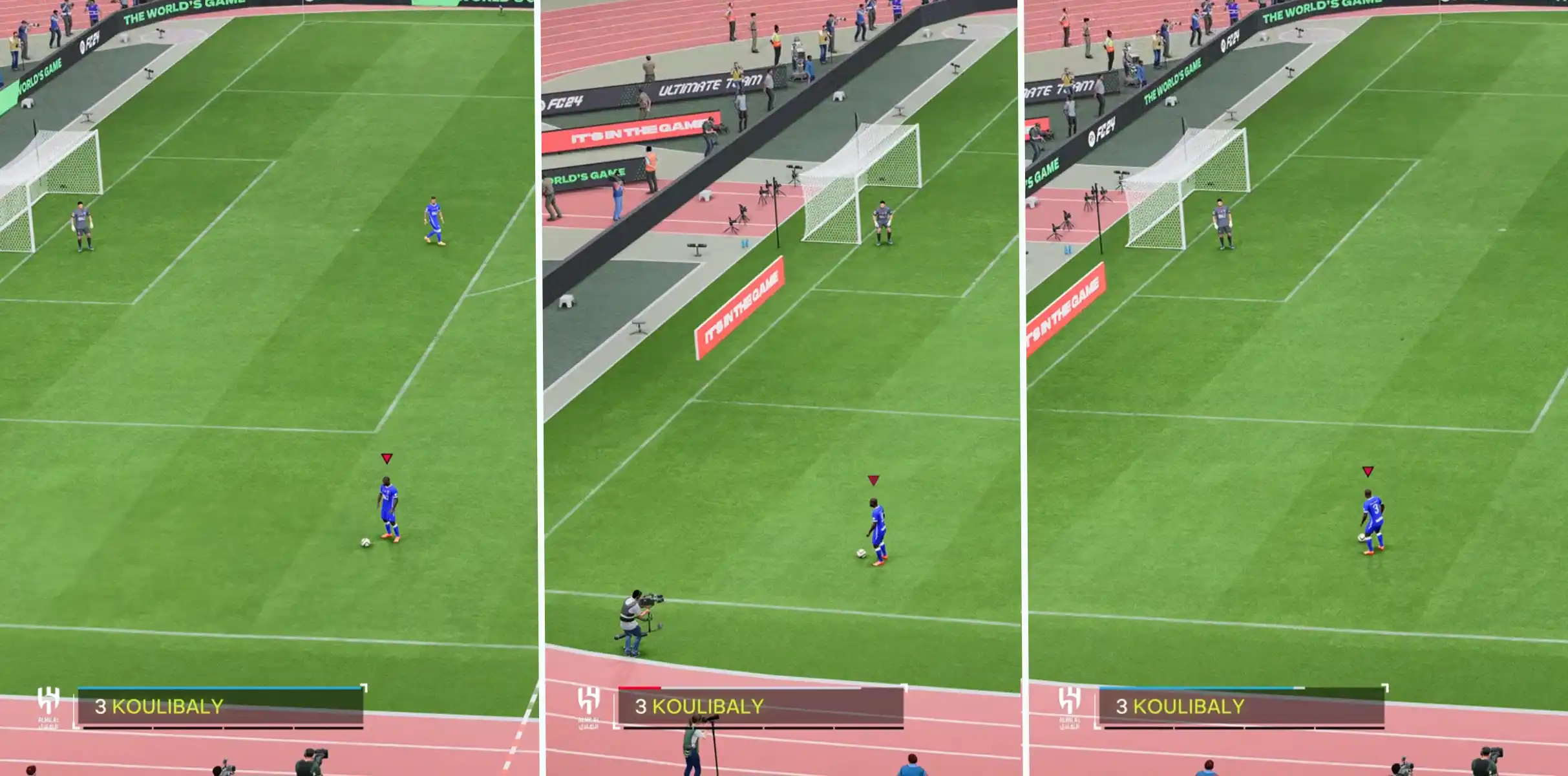
Fitness Bars
During a match, each player has two fitness bars:
- Instant bar
represented by a blue bar that goes red in extreme situations; - Accumulated bar
represented by a white bar overlaid by the blue bar.
For instance, in the example above, a player begins with high energy (left) but loses it quickly during intense activity. With sufficient rest, most energy can be regained. Later in the game (right), however, even with rest, the player can no longer fully restore their initial fitness level.
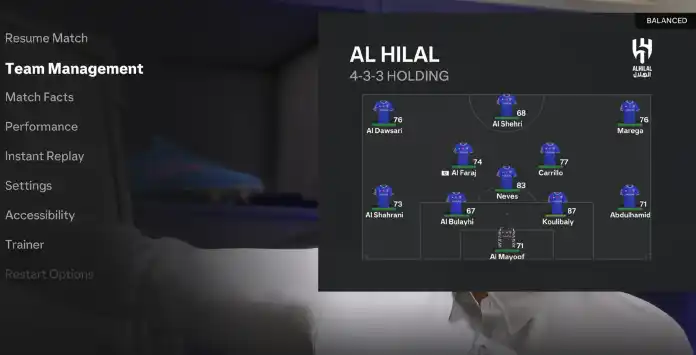
How Fitness is Affected
In general, a player’s fitness level will vary based on the following factors:
- Playing Time
The longer a player stays on the pitch, the more fitness they lose. Typically, playing only one half results in about half the fitness loss compared to a full 90-minute match. - Stamina
Stamina varies between players. To maintain high energy levels throughout the match, ensure your players have a strong ‘stamina’ in-game (IG) stat. - Effort Made
Fitness depletion depends on distance covered, intensity, and frequency of movement. The more effort a player exerts, the faster their fitness declines. - Injuries
Keeping an injured player on the pitch significantly reduces their fitness, especially when they engage in challenges.
FC 27 Fitness measures the player’s physical condition.
A player with very low fitness will perform poorly. His movements will be slower, he may struggle to keep up with teammates and opponents, and his risk of injury increases.
Many believe that Fitness no longer matters in FC, but this is not true. The main change in FIFA 21 is that all players now start matches at maximum Fitness. This eliminates the need for fitness squads, using fitness items, or resting players, as they are always ready to perform.
As a result, fitness items and fitness coaches were removed from Ultimate Team following this update.
As a result, fitness items and fitness coaches were removed from Ultimate Team following this update.
A player’s spent fitness is directly proportional to how long he’s on the pitch. So, generally speaking, if he plays just for one half, he’ll have spent half the fitness he would’ve spent playing 90 minutes.
Stamina varies among players and affects how quickly their fitness decreases during a match. Players with higher stamina retain their energy longer, enabling them to perform well even in the later stages of the game.
To ensure your team stays strong for the full 90 minutes, focus on players with a high in-game (IG) ‘stamina’ rating.
To ensure your team stays strong for the full 90 minutes, focus on players with a high in-game (IG) ‘stamina’ rating.
In Ultimate Team, a player’s fatigue is affected by the distance they cover, how intensely they move, and how often they perform actions.
For instance, goalkeepers usually move less and face fewer challenges, so their fitness decreases more slowly than that of outfield players. Ultimately, the rate of fitness loss depends on in-game actions, which are determined by the player—usually you.
For instance, goalkeepers usually move less and face fewer challenges, so their fitness decreases more slowly than that of outfield players. Ultimately, the rate of fitness loss depends on in-game actions, which are determined by the player—usually you.
Football Club features two types of injuries: ones that require substitutions during a match and ones that lower a player’s fitness. In the latter case, it’s up to you whether to keep the injured player on the pitch, knowing they will underperform. Even if they stay on the field, taking part in challenges will rapidly drain their fitness, particularly against strong defenders.
To reduce injury risk, avoid overly aggressive actions like sliding tackles from behind. Repeated high-intensity efforts can also increase the chance of muscular injuries over time.
To reduce injury risk, avoid overly aggressive actions like sliding tackles from behind. Repeated high-intensity efforts can also increase the chance of muscular injuries over time.
The Instant bar, depicted as a blue bar that transitions to red during intense moments, depletes during sprints, challenges for the ball, or other exertions, and subsequently replenishes. The accumulated bar, visible as a white bar beneath the blue one, diminishes gradually over the course of a match and acts as a cap for the instant fitness bar.

A close examination of the image helps clarify any uncertainties.
The scale ranges from 1 to 5, with the largest bar gradually decreasing. In state 1, the bar is nearly full, indicating high energy levels. In state 2, the player is actively running, experiencing temporary fatigue and reduced endurance. However, the white bar remains larger, suggesting better recovery potential than in state 3.
By state 4, the player is close to exhaustion, struggling to sustain efforts and fatiguing quickly. In state 5, they reach a critical condition where further exertion increases the risk of injury, making substitution or rest essential.
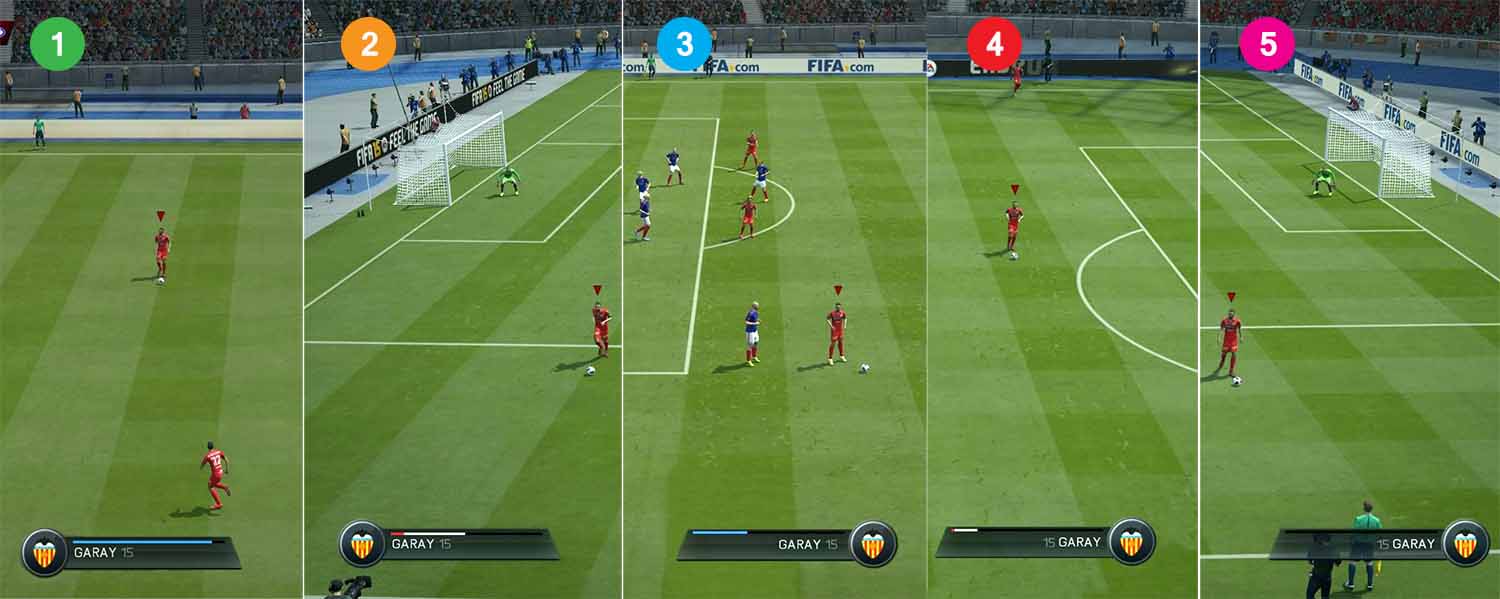
A close examination of the image helps clarify any uncertainties.
The scale ranges from 1 to 5, with the largest bar gradually decreasing. In state 1, the bar is nearly full, indicating high energy levels. In state 2, the player is actively running, experiencing temporary fatigue and reduced endurance. However, the white bar remains larger, suggesting better recovery potential than in state 3.
By state 4, the player is close to exhaustion, struggling to sustain efforts and fatiguing quickly. In state 5, they reach a critical condition where further exertion increases the risk of injury, making substitution or rest essential.
es. In Competitive modes like Rivals and Champions, a player’s ability to sprint remains unaffected by fatigue. They maintain full running capacity right up to the final minute of the match.