

Stamina and Fatigue
Stamina represents a player’s ability to maintain physical effort throughout a match. It influences how effectively the player can continue performing demanding actions as their energy is consumed and fatigue accumulates.
FC 27 Ultimate Team does not use the former persistent Fitness system. Every Player Item starts each new match with full energy, and Fitness consumables are not required. Energy does not carry over from one Ultimate Team match to the next.
During a match, stamina consumption is influenced by the player’s Stamina Attribute, playing time, movement, actions, tactical instructions and gameplay mode. Short-term fatigue can recover during quieter periods, while long-term fatigue gradually limits the maximum amount of energy that can be restored.
You can monitor a player’s stamina in two main locations:
- During the match, through the stamina indicator displayed above or alongside the player’s name;
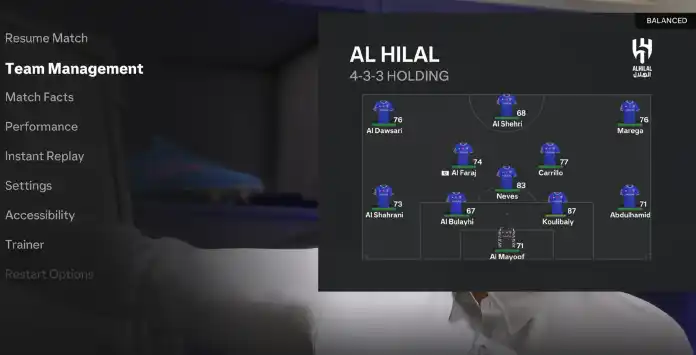
- From [Pause] > [Team Management], through the stamina bar shown beside each player.
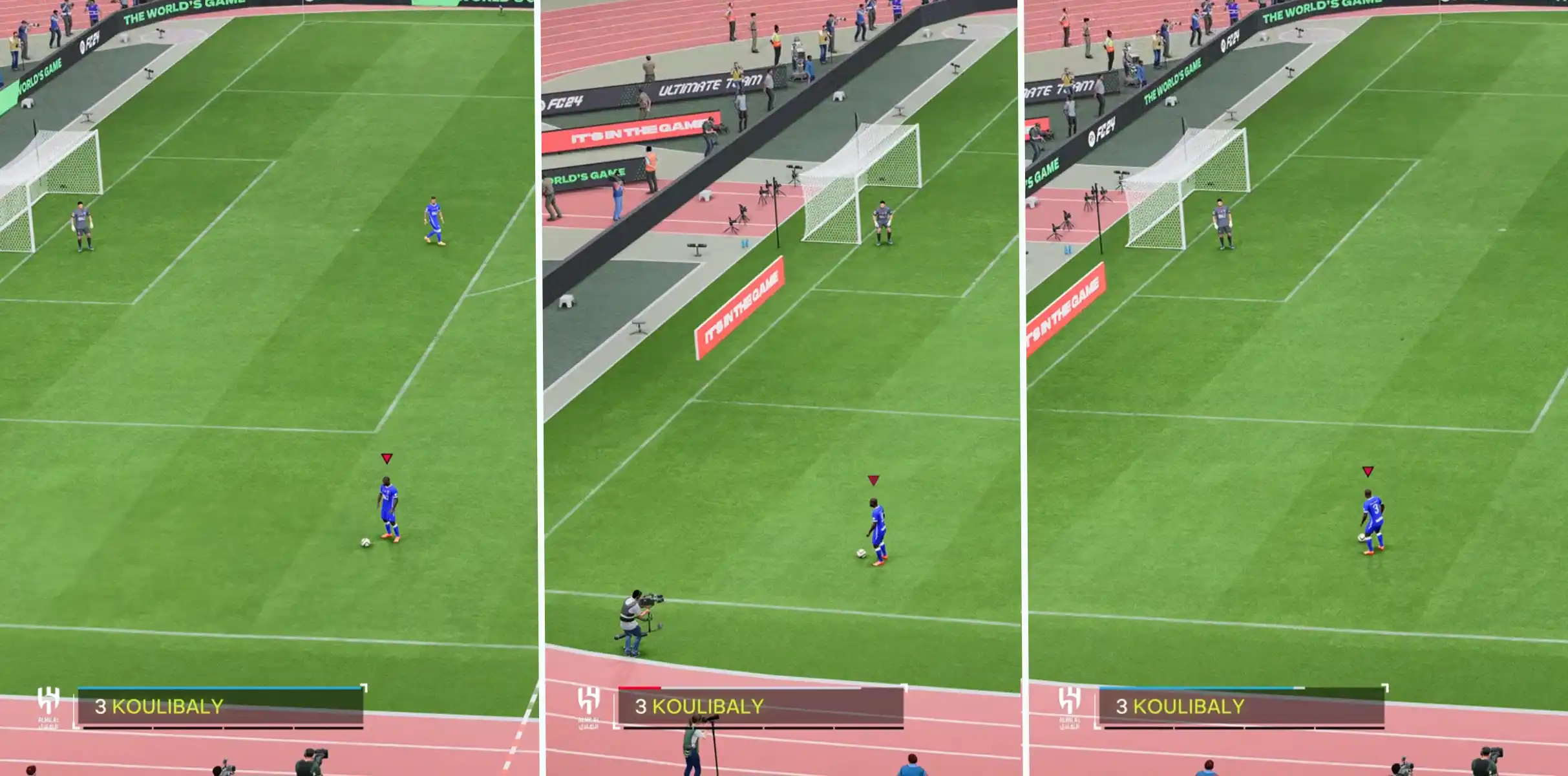
Stamina and Fatigue Bars
During a match, the stamina indicator represents two related components:
- Short-Term Stamina
Represented by the active bar, which can change colour when energy reaches a critically low level. It decreases during demanding actions such as sprinting, pressing and tackling, but can recover when the player reduces their physical effort. - Long-Term Stamina
Represented by the underlying portion of the indicator. It gradually decreases throughout the match and determines the maximum level to which short-term stamina can recover.
In the example above, the player begins with a high stamina level on the left. After repeated physical effort, the player’s recoverable energy becomes progressively lower, as shown on the right. Resting can restore short-term stamina, but it cannot completely reverse the long-term fatigue accumulated during the match.
How Stamina is Affected
A player’s stamina consumption and fatigue level are influenced by several factors:
- Playing Time
The longer a player remains on the pitch, the more long-term fatigue they are likely to accumulate. However, energy consumption is not completely linear and depends on how actively the player is involved in the match. - Stamina Attribute
Players with a higher Stamina Attribute are generally better equipped to maintain their activity throughout the match. This Attribute is particularly valuable for positions and roles that require frequent runs, defensive recovery and movement across large areas. - Physical Effort
Sprinting, pressing, tackling and making repeated attacking or defensive runs consume energy. Short periods of intense activity can rapidly reduce short-term stamina, although part of it can be recovered when the player slows down. - Team Tactics
Aggressive defensive approaches and instructions that require frequent pressing or movement can increase the physical demands placed on players. More conservative tactics generally help preserve stamina for later stages of the match. - Extra Time
Players who remain on the pitch beyond the regular 90 minutes continue accumulating fatigue. Substitutes can provide a considerable physical advantage during extra time because they enter the match with more available energy. - PlayStyles
Relentless and Relentless+ improve aspects of stamina recovery and help players perform physically demanding actions more effectively, although their precise effects depend on the gameplay mode and tuning.
Stamina represents a player’s ability to maintain physical effort throughout a match. Fatigue is the reduction of available energy caused by playing time, movement, intensive actions and tactical demands. Short-term fatigue can recover during the match, while long-term fatigue gradually limits how much stamina can be restored.
No. Ultimate Team no longer uses the persistent Fitness system in which players had a physical condition rated from 1 to 99 that carried over between matches. Every Player Item starts each new Ultimate Team match with full energy, so you do not need Fitness squads, consumables or rest matches.
Yes. Stamina is an individual Player Attribute rated from 1 to 99. It should not be confused with the former Fitness value. The Stamina Attribute influences how effectively a player maintains physical activity during a match, while the stamina bar displays their current available energy.
Yes. Every Player Item starts each new Ultimate Team match with full energy, regardless of how much stamina they had at the end of the previous match. Energy consumption and fatigue only need to be managed during the current match.
The effect depends on the gameplay mode and who is controlling the player. In Authentic Gameplay, low stamina can reduce a player’s ability to maintain intensive movement. In Competitive Gameplay, directly controlled players do not receive fatigue-based reductions to Sprint Speed and Acceleration, but AI-controlled teammates can be affected while they are not selected.
Players generally accumulate more long-term fatigue the longer they remain on the pitch. However, stamina consumption is not completely proportional to playing time. A player who sprints, presses and makes frequent runs may consume considerably more energy than a player who remains less involved for the same number of minutes.
Players with a higher Stamina Attribute are generally better suited to roles requiring sustained movement, repeated runs and defensive recovery. The Attribute is particularly valuable for fullbacks, wingbacks, box-to-box midfielders and other players expected to cover large areas of the pitch.
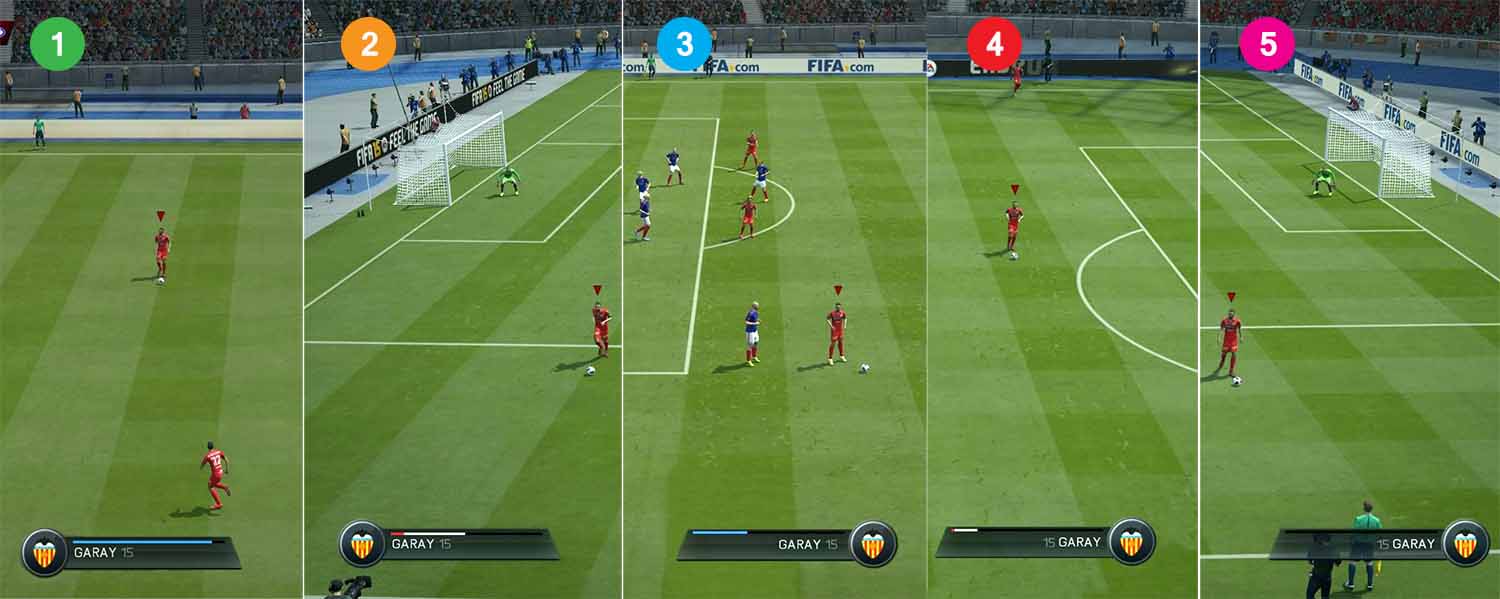
The Instant bar, depicted as a blue bar that transitions to red during intense moments, depletes during sprints, challenges for the ball, or other exertions, and subsequently replenishes. The accumulated bar, visible as a white bar beneath the blue one, diminishes gradually over the course of a match and acts as a cap for the instant stamina bar.

A close examination of the image helps clarify any uncertainties.
The scale ranges from 1 to 5, with the largest bar gradually decreasing. In state 1, the bar is nearly full, indicating high energy levels. In state 2, the player is actively running, experiencing temporary fatigue and reduced endurance. However, the white bar remains larger, suggesting better recovery potential than in state 3.
By state 4, the player is close to exhaustion, struggling to sustain efforts and fatiguing quickly. In state 5, they reach a critical condition where further exertion increases the risk of injury, making substitution or rest essential.
A close examination of the image helps clarify any uncertainties.
The scale ranges from 1 to 5, with the largest bar gradually decreasing. In state 1, the bar is nearly full, indicating high energy levels. In state 2, the player is actively running, experiencing temporary fatigue and reduced endurance. However, the white bar remains larger, suggesting better recovery potential than in state 3.
By state 4, the player is close to exhaustion, struggling to sustain efforts and fatiguing quickly. In state 5, they reach a critical condition where further exertion increases the risk of injury, making substitution or rest essential.
Yes. Aggressive defensive approaches, frequent pressing and tactical instructions that demand constant movement can increase stamina consumption. More conservative tactics may help preserve energy, particularly during the closing stages of a match or before extra time.
Injuries and stamina are separate gameplay systems. An injury may affect a player’s performance or require a substitution, but there is no confirmed universal rule stating that every injured player automatically loses stamina more quickly when taking part in challenges.
The active component represents short-term stamina. It decreases during demanding actions but can recover when the player reduces their physical effort. The underlying component represents long-term stamina and gradually decreases throughout the match, limiting the maximum level to which short-term stamina can recover.
Yes. In Competitive Gameplay, directly controlled players do not receive fatigue-based reductions to Sprint Speed and Acceleration. AI-controlled teammates can receive reductions proportional to their fatigue level while they are not selected. Players belonging to a team entirely controlled by the CPU are also exempt from these reductions under Competitive tuning.
Authentic Gameplay uses the more traditional fatigue system. As stamina decreases, tired players can become less capable of maintaining intensive movement and repeated physical effort. Managing substitutions, tactics and player workloads is therefore more important.
Clubs uses a separate implementation. Short-term fatigue remains active and can temporarily affect a player after intensive actions, while long-term fatigue does not accumulate in the same way as it does in a traditional eleven-a-side match.
Yes. Relentless and Relentless+ improve aspects of short-term stamina recovery, helping players cope more effectively with physically demanding actions. Their exact impact depends on the gameplay mode and its fatigue tuning.
It depends on the mode, the player’s role and whether they are frequently controlled by the AI. A substitute enters with more available energy and can provide fresher off-the-ball movement, particularly late in a match or during extra time. In Competitive Gameplay, directly controlling a tired player prevents fatigue-based reductions to Sprint Speed and Acceleration, but their AI behaviour can still be affected when they are not selected.